
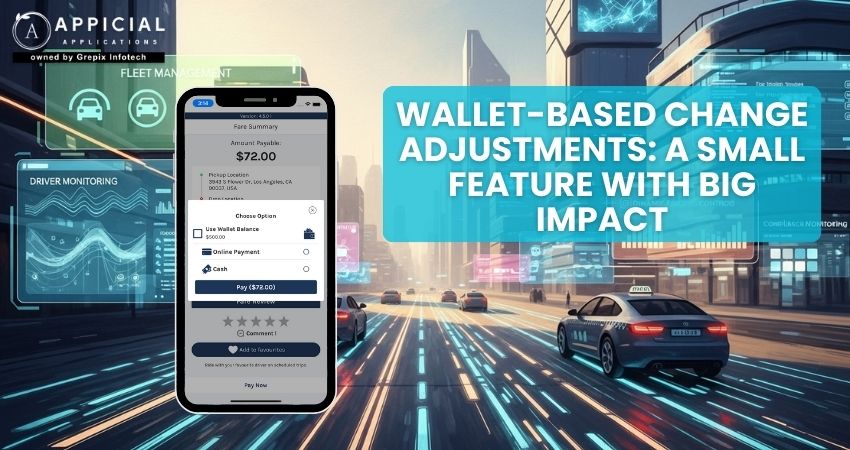
Wallet-Based Change Adjustments: A Small Feature With Big Impact
The ride-hailing sector continues to evolve with precision-driven digital features designed to improve accuracy, speed, and customer satisfaction. Among these features, wallet-based change adjustments stand out as a seemingly simple mechanism that solves several operational challenges in a ride-sharing app. It is a system that automatically credits or debits fare adjustments to a rider’s in-app wallet instead of relying on drivers to handle physical change or manual recalculations. This feature offers clarity for all parties and reduces the friction often present at the end of a trip. It also supports large-scale operational efficiency for any Uber Clone platform.
Digital payment adoption has grown significantly. According to global mobility reports, more than 72% of ride-hailing users choose digital payments over cash. Fare rounding issues and discrepancy management top the list of customer service complaints in markets that still rely heavily on mixed payment modes. For this reason, many companies now integrate automated wallet adjustment flows into their white-label taxi booking app. This trend shows how small UX improvements can produce measurable outcomes in trust-building and customer retention.
This blog explains how wallet-based change adjustments create efficiency, trust, and transparency inside a ride-sharing app ecosystem. It evaluates operational value, rider impact, and financial accuracy while highlighting why this feature is increasingly essential for any Uber Clone platform. The article also covers usability considerations, market statistics, long-term benefits, and development insights, ending with an elaborate conclusion promoting Appicial Applications.
What Makes Wallet-Based Change Adjustments Important for a Ride-Hailing Platform?
Wallet-based change adjustments enhance operational transparency and reduce conflict between riders and drivers. In traditional taxi systems, disputes about change are common when the fare does not match cash denominations. A simple automated rule inside the Uber Clone app removes the problem completely. Riders no longer need exact cash, and drivers no longer need to carry loose change. Small friction points like these significantly impact user experience, especially across thousands of daily rides.
This feature also helps create consistent earning flows for drivers. Automated micro-adjustments ensure that drivers are compensated correctly without manual calculations. The system logs every modification for accountability, which supports dispute resolution and strengthens trust.
From a platform perspective, this feature reduces support queries related to payment discrepancies. Leading mobility platforms report that automated payment adjustments decrease fare-related complaints by nearly 40%. This reduction lowers support costs and improves user satisfaction across the ride-sharing app ecosystem.
How Does a Wallet-Based Adjustment System Work in an Uber Clone Environment?
A successful adjustment system operates through a set of predefined rules inside the Uber Clone platform. When the trip ends, the fare is calculated automatically using distance, duration, surge pricing, and applied discounts. If the rider selected cash as the payment method but cannot provide exact change, or if the driver cannot return the remaining amount, the difference is moved to the rider’s wallet.
The system supports both scenarios:
- Rider owes the driver a small remaining amount.
- Driver owes the rider a small remaining balance.
In both cases, the wallet absorbs the difference. This method eliminates awkward interactions and saves time. It also reduces fraudulent disputes by recording every adjustment inside the transaction history. Because this mechanism works identically for every ride, consistency enhances reliability for users of any white-label taxi booking app.
Why Does This Feature Improve Rider Convenience and Satisfaction?
Riders value predictability and transparency. Wallet-based adjustments achieve both. When riders do not have to worry about exact currency denominations, the journey feels more seamless. According to mobility user surveys, more than 61% of riders prefer services that offer digital wallet flexibility because it adds convenience during peak hours or when carrying cash is impractical.
Another advantage is improved cost clarity. Every adjustment is displayed inside the transaction log, eliminating confusion that commonly arises in traditional taxi models. For companies offering a white label taxi app development company solution, adding this feature means positioning the platform as modern, trustworthy, and customer-focused.
It also supports repeat usage. Riders with money left in their wallet after an adjustment often return to the app sooner. This cycle improves ride frequency, boosting platform revenue and long-term retention rates.
How Does This Feature Impact Drivers and Their Overall Experience?
Drivers using a ride-sharing app benefit equally from wallet-based adjustments. Manual fare rounding wastes time, especially in high-traffic areas where speed is essential for maximizing daily earnings. Automated adjustments let drivers complete more trips per hour, which directly improves income.
Additionally, accuracy matters. Incorrect change exchanges lead to long-standing dissatisfaction among drivers. Automated systems reduce human error, minimizing disputes. Drivers also gain access to clear logs showing adjustments made in their favor or deducted from future payments. Such transparency increases platform trust, an essential element for any taxi app development company.
Drivers also experience reduced stress. Without the requirement of handling coins or small denominations, they can focus entirely on safe driving and customer service.
What Operational Benefits Do Platforms Gain by Implementing This Feature?
The operational advantages are substantial. Platforms using wallet-based adjustments report measurable reductions in customer service workload. Since fare disputes are among the top support tickets, an automated system minimizes manual interventions. This contributes to improved operational efficiency and lower staffing requirements.
Another advantage is better financial reporting. Automated logs capture every change adjustment, which helps administrators track overall platform flows. For a white label taxi app development company, this strengthens backend accuracy and auditability.
Platforms also experience improved payment reliability. Where digital banking is not fully established, a hybrid cash-and-wallet approach maintains operational continuity. This allows greater usability of the Uber Clone and provides for the application to be scaled on various markets.
Learn More: How Multi-Language Support Helps Taxi Apps Go Global
Why Are Wallet-Based Adjustments Becoming a Standard Expectation in Modern Ride-Sharing Apps?
The global ride-hailing market continues to push for digital-first experiences. Wallet-based features are no longer optional. They align with customer expectations shaped by major mobility leaders, and users now expect similar convenience across all platforms.
Many taxi app development company reports indicate that wallet-based automation will soon be integrated into over 80% of ride-hailing solutions. This projection is driven by three major factors:
- Rising digital payment adoption
- Growing demand for transparency
- Increased need for operational efficiency
These features also support international expansion. A white-label taxi booking app equipped with automated wallet mechanisms can adapt to different cash cultures and currencies without redesigning payment workflows.
What Should App Owners Consider Before Implementing This Feature?
App owners also need to be aware of wallet compliance and regulations, as well as local payment habits. In some markets, mandates require digital wallets to either comply with these rules or work with approved payment processors. A white label taxi app development company with experience will get this right for you.
Another is UI/UX clarity. A rider should intuitively understand the concept of adjustments, the injection of money into the wallet, and their ability to use it for subsequent rides. Effective communication minimizes ambiguity and promotes the uptake of digital wallets.
Scalability on the backend is important, too. The adjustment engine needs to process thousands of transactions a day without latency or error. It’s also designed so that as the ride-sharing app grows, it can seamlessly scale with it.
Conclusion
While these adjustments for wallet changes may seem small, over an entire ecosystem of a ride-sharing app they are significant. They minimize arguments, promote equity, shorten the length of the trip, and create greater financial clarity for riders and drivers. These also bring great efficiency to the platform owner, and are an extremely necessary feature in any modern Uber Clone. These minute tweaks will be increasingly relevant to remain competitive while executing user expectations as digital services grow worldwide.
For entrepreneurs looking to develop a ride hailing solution, or those seeking to improve an existing one, the advanced, future-ready platforms at Appicial Applications include intelligent features such as wallet adjustments, automated fare engines and smooth digital payment processes. Being the top taxi app development company and an internationally trusted name in taxi app development, Appicial provides solutions that are adaptable, scalable, and proven to succeed.
Ready to build a smarter, more efficient ride-hailing app? Contact Appicial Applications today and accelerate your growth with a powerful, feature-rich digital platform.
FAQs
Author's Bio

Vinay Jain is the Founder at Grepix Infotech and brings over 12 years of entrepreneurial experience. His focus revolves around software & business development and customer satisfaction.
Back to blog list