
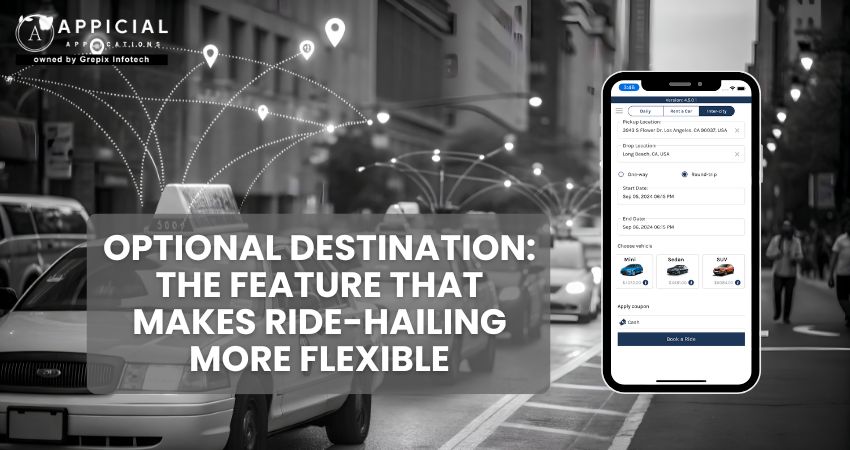
Optional Destination: The Feature That Makes Ride-Hailing More Flexible
The global ride-hailing sector is entering a new phase. Platforms face rising demand, sharper competition, and stricter expectations from drivers and riders. Analysts expect the market to reach over $300 billion by 2030, driven by urban growth and digital adoption. As services expand, operators must refine their systems and improve trip allocation. Many platforms now integrate features that increase fairness and reduce friction. One of the most important additions is the Optional Destination feature.
Optional Destination changes how platforms handle trip assignments. In a standard ride, drivers see the rider’s endpoint before accepting. This often leads to selective behavior. Drivers avoid long trips, low-demand zones, or routes that may disrupt earnings. Over time, these choices distort the supply map and create gaps in coverage. Riders wait longer. Dispatch systems face more drop-offs and cancellations. The platform’s performance suffers.
Optional Destination reduces these problems. It delays the destination reveal until the ride begins. Drivers accept based on proximity and demand, not assumptions. This approach keeps the system balanced and predictable. It also supports platform growth, especially for businesses operating a Ride-sharing app or an Uber Clone.
For companies building or upgrading a white-label taxi booking app, the feature helps create a more disciplined system. It raises acceptance rates, improves average trip volume, and reinforces trust. The feature is becoming a standard benchmark for any platform aiming for fair allocation and long-term stability.
This article explores the Optional Destination feature used in ride-hailing platforms. It explains how the feature improves operational efficiency, stabilizes driver earnings, and enhances rider experience. It also reviews the impact on scalability, dispatch fairness, and platform growth. Businesses adopting an Uber Clone or Ride-sharing app can use Optional Destination to improve performance and reduce friction. The article ends with a detailed conclusion and a call to action for Appicial Applications, a leading white label taxi app development company.
What Is the Optional Destination Feature?
Optional Destination hides the rider’s drop-off point until the trip begins. Drivers only see pickup details during request time. Once the ride starts, the full route becomes visible. This design ensures unbiased trip selection. It encourages more consistent acceptance behavior and prevents destination-based filtering.
In many regions, platforms observed that trip rejection increased during peak hours or late nights. Drivers preferred short, profitable routes. Optional Destination keeps the system neutral. It removes a major cause of selective behavior. For operators of an Uber Clone, this results in more stable performance and fewer disruptions.
Platforms offering a white-label taxi booking app also use this feature to maintain uniform coverage across cities. With fewer rejections, supply dispersion stays balanced. High-demand and low-demand areas receive fair attention.
How Does Optional Destination Improve Driver Experience?
Driver satisfaction remains a core metric for ride-hailing platforms. Surveys suggest that almost 70% of driver churn stems from inconsistent earnings, long idle periods, and unpredictable trip patterns. Optional Destination addresses these challenges with several measurable benefits.
- Fair Ride Allocation Drivers are less tempted to favor specific routes. The system distributes trips more evenly. Each driver has access to similar ride opportunities over time.
- Lower Idle Time Idle time affects daily income. Fewer rejections mean drivers spend less time waiting for the next request. Platforms also report higher acceptance rates—sometimes by double-digit percentages—after implementing the feature.
- More Predictable Earnings A steady flow of trips leads to more stable income. Drivers can plan working hours better. Regular earnings reduce dissatisfaction and prevent churn.
For Uber Clone operators and mobility brands, maintaining driver retention is essential. When powered by a strong taxi app development company, Optional Destination becomes an effective retention tool.
Why Does an Optional Destination Improve Rider Convenience?
Rider expectations continue to rise. They want fast arrivals, confirmed drivers, and fewer cancellations. Optional Destination supports these outcomes in several ways.
- Faster Pickup Times Drivers accept trips more consistently. The platform dispatches available drivers quickly. Riders experience shorter wait times, especially during busy hours.
- Improved Availability Coverage improves because drivers no longer cluster in high-value neighborhoods. As coverage spreads, riders in outer zones also benefit from faster matching.
- Lower Cancellation Rates Cancellations fall when drivers commit to trips without checking destination factors. Riders enjoy smoother service and fewer disruptions.
These improvements strengthen the value of a Ride-sharing app or white-label taxi booking app in competitive markets.
What Operational Benefits Does Optional Destination Offer?
Ride-hailing businesses depend on stable operations. Every minute of delay, every rejection, and every idle driver adds cost. Optional Destination streamlines several operational layers.
- Better Dispatch Efficiency Algorithms do not rely on destination preference biases. They assign rides based on proximity and availability. This simplifies matching and reduces errors.
- Higher Trip Completion Acceptance rates rise when drivers cannot filter destination types. That results in higher daily trip counts per driver.
- Balanced Supply Supply maps stay more even. Hotspots do not absorb all drivers. Underserved areas receive more consistent coverage.
When implemented by a skilled white label taxi app development company, the feature supports stronger, more reliable dispatch systems.
How does an Optional Destination support Platform Scalability?
A platform cannot scale if dispatch quality decreases with growth. Optional Destination helps maintain stability as user volume increases.
- Efficient Matching Under Load Matching remains fast even during surge periods. The reduction in rejection helps the system handle higher volume.
- Stronger Geographic Expansion Balanced driver allocation makes expansion smoother. New zones receive steady service from day one. Riders in developing areas see fewer delays.
- Clearer Performance Insights Data from Optional Destination patterns provide accurate insights about real demand behavior. Platforms can forecast, adjust incentives, and plan city expansion more effectively.
For any taxi app development company, scalability is a priority. This feature supports long-term growth strategies.
Why Should Modern Ride-Hailing Platforms Adopt Optional Destination?
Optional Destination is now viewed as a core operational feature rather than an optional add-on. Its advantages span behavior, fairness, and revenue stability.
- It prevents selective acceptance.
- It supports predictable system behavior.
- It enhances both sides of the marketplace.
- It decreases operational volatility.
- It strengthens the brand’s public perception.
Platforms that want to compete with global titles adopt the feature early. Operators using an Uber Clone or Ride-sharing app gain a strategic edge by integrating it.
Learn More: Single Ride vs Street Pickup: How Hybrid Booking Transforms Urban Mobility
What Challenges Does Optional Destination Solve?
Modern mobility networks face recurring challenges. Optional Destination addresses several of them.
- Destination Bias Drivers may avoid long trips or unprofitable regions. The feature neutralizes this bias. It restores fairness in allocation.
- Uneven Supply Some areas often remain underserved. Optional Destination improves supply distribution.
- Reduced Efficiency During Peak Hours Peak periods bring complex patterns. Fewer rejections help maintain stable operations even under pressure.
These improvements strengthen any platform designed by a leading white label taxi app development company.
Optional Destination as a Competitive Advantage
Mobility markets are competitive. A platform must rely on reliable performance to stand out. Optional Destination helps companies craft a strong user experience. It signals fairness and discipline. It gives both drivers and riders confidence in the system.
For operators using an Uber Clone, this feature helps match global standards. It also becomes part of the brand’s value proposition, especially in regions where reliability is a deciding factor.
When implemented by an expert taxi app development company, Optional Destination becomes a mature, stable, and scalable tool.
Conclusion
Optional Destination is now central to the future of ride-hailing technology. It improves dispatch fairness, reduces friction, and supports steady earnings for drivers. It also strengthens rider experience, lowers wait times, and simplifies platform operations. Every mobility business aiming to scale, whether through a Ride-sharing app, should consider this feature essential.
If your company plans to launch or upgrade a mobility platform, you need a partner with proven expertise. Appicial Applications builds advanced, scalable, and fully customizable solutions for ride-hailing businesses. As a trusted white label taxi app development company and established taxi app development company, Appicial offers the Optional Destination feature as part of a complete, enterprise-grade mobility ecosystem.
Contact Appicial Applications today to build a modern platform that meets global standards and supports long-term growth.
FAQs
Author's Bio

Vinay Jain is the Founder at Grepix Infotech and brings over 12 years of entrepreneurial experience. His focus revolves around software & business development and customer satisfaction.
Back to blog list