
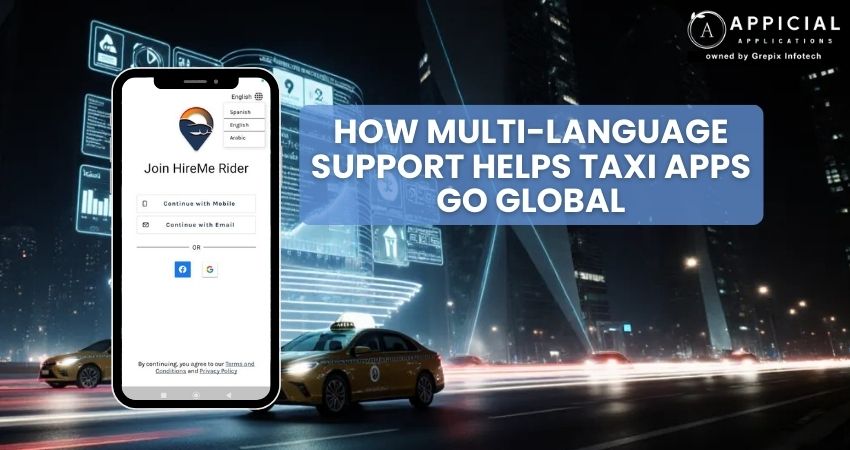
How Multi-Language Support Helps Taxi Apps Go Global
The ride-hailing industry now spans every major region. Language has become a clear barrier for many users. Even confident English speakers often prefer apps in their native language. It feels natural. It reduces mistakes. It speeds up decisions. For taxi apps trying to grow outside their home market, this matters more than most people assume.
Recent studies show that more than 70% of users choose apps offering their local language. That tells us something obvious: people trust what they understand immediately. They don’t want to guess. They don’t want confusing terms or unclear alerts. A multilingual interface solves this quickly. It also builds confidence, which is essential for transportation apps.
Companies creating an Uber Clone, launching a ride-sharing app, or using a white-label taxi booking app must consider localization early. Without it, scaling gets harder. A professional taxi app development company knows this. They plan language support as part of the core system, not an add-on. That’s why many global taxi apps achieve traction faster when they include multiple languages from day one.
This blog explains how multi-language support strengthens taxi apps in global markets. It breaks down its effect on usability, conversions, driver onboarding, and brand growth. The content is practical and focuses on real patterns seen in modern ride-hailing operations. Companies building an Uber Clone, ride-sharing app, or white-label taxi booking app will learn how localization shapes user behavior. The summary also highlights the role of a skilled taxi app development company in implementing multilingual features.
Why Is Multi-Language Support Critical for Global Ride-Hailing Growth?
A taxi app that speaks only one language limits itself. Users hesitate to book rides when they cannot understand the app interface. Multi-language support removes that hesitation instantly. It is simple, but the effect is huge.
When companies expand into Europe, Latin America, the Middle East, or Africa, they meet users with different communication habits. Every region has its own expectations for clarity. A multilingual Uber Clone adapts smoothly to these differences. This is why multilingual systems often show faster adoption rates in new markets.
Industry reports estimate that ride-hailing platforms with localized interfaces increase user sign-ups by 20% or more in non-English-speaking regions. Companies that partner with a white label taxi app development company often see that benefit early. They get a system designed for diverse markets, not just one country.
How Multi-Language Features Increase User Trust and Satisfaction?
Taxi apps need trust. Passengers want clarity about fares, directions, timing, and safety options. When the app uses their language, they feel more secure. They read faster. They make fewer mistakes. They trust the numbers and instructions.
Misunderstandings cause frustration. Cancellations rise when users do not understand app steps. A multilingual ride-sharing app reduces those issues. It simplifies actions and cuts down uncertainty.
Research in mobility services shows that customer satisfaction goes up by roughly 25–30% when the app supports at least one additional local language. It may look like a small change from the outside, but it reshapes how users behave. This is why a capable taxi app development company always recommends multi-language design for global rollouts.
How Localization Improves Conversion Rates in Taxi Apps?
Localization is not just swapping words. It adapts the entire app to match local behavior. Different markets require different detail levels. Some users prefer short instructions. Some prefer long explanations. Currency format, date style, map labels, and units all influence conversion.
A multilingual white-label taxi booking app supports these variations more effectively. This is one reason why localized apps see higher booking completion rates. People feel the app was built for them, not for someone else far away.
When building an Uber Clone, founders often underestimate these small details. But nearly 40% of first-time users abandon apps when the interface feels foreign. That loss is avoidable. Companies using a white label taxi app development company usually catch these issues early because localization is part of their deployment plan.
How Multi-Language Support Enhances Driver Onboarding and Retention?
Drivers need clarity even more than riders. They deal with routes, earnings, bonuses, ratings, and customer messages every day. If that information appears in an unfamiliar language, mistakes grow. Miscommunication grows. Stress grows. Eventually, drivers switch apps.
A multilingual interface helps them stay comfortable. It lets them understand incentives and follow app updates without frustration. This improves retention, which is a major challenge in ride-hailing. Many drivers use more than one platform. They choose the one that feels easiest.
Studies show that driver churn drops by about 18% when apps provide local-language support. This simple feature helps maintain a stable supply of active drivers. A strong taxi app development company ensures both the rider app and driver app get consistent localization.
Multi-Language Support as a Competitive Advantage in the Global Taxi Market
Ride-hailing is crowded. New apps show up every year. Many launch quickly using a white-label taxi booking app. But the successful ones take user comfort seriously. Language is part of that comfort.
Offering multiple languages signals that the brand respects local culture. This makes a strong impression in markets where loyalty is difficult to earn. Passengers tend to stick with apps that feel familiar. They also recommend them to friends.
A multilingual ride-sharing app often appears more professional. It communicates that the company understands global users. A good white label taxi app development company helps brands build this advantage early, instead of trying to fix it later.
Learn More: The Complete Guide to Taxi App Administration in 2025
>How Multi-Language Support Helps Meet Local Regulations?
Some regions have strict rules. They require digital services to support their national language. Compliance matters. Without it, the app may face restrictions or delays.
When launching an Uber Clone or similar system, founders must check these rules. A reliable taxi app development company usually handles this during setup. They design the system so it aligns with language regulations. It prevents legal issues and keeps the app available without interruption.
This matters in places like the EU, Gulf countries, and parts of Asia. A multilingual setup avoids bureaucratic hurdles that slow down growth.
Impact of Multi-Language Support on Brand Image and Global Identity
Language shapes perception. A taxi app that respects local language creates a positive impression. It shows effort. It shows attention to detail. People notice these things, even if they don’t talk about them.
A strong brand must feel accessible in every region. Multi-language support helps achieve that. It strengthens the brand image and makes the app feel “local” in every new market.
Companies launching a white-label taxi booking app usually benefit from this because the platform offers built-in global readiness. A seasoned taxi app development company knows how to design the UI so that each language version feels natural, not forced.
The Role of Multi-Language AI and Automation in Modern Taxi Apps
AI tools now handle translations more accurately than before. They speed up localization and reduce manual work. This helps companies update their apps without long delays.
A multilingual chatbot can answer simple questions instantly. It supports passengers and drivers without expanding support teams. This lowers operating costs for growing ride-sharing apps.
When a company builds an Uber Clone, AI-driven translation systems help keep the interface consistent across languages. A skilled white label taxi app development company integrates these systems smoothly, so the app feels unified even with many languages.
Conclusion
Multi-language support is a core requirement for global ride-hailing today. It boosts trust, adoption, and daily usage. It improves clarity for riders and drivers. It strengthens brand perception and helps companies meet regional regulations. Any business launching a ride-sharing app, Uber Clone, or white-label taxi booking app needs this feature to compete worldwide.
If you want a multilingual taxi app built the right way, Appicial Applications is a strong partner. The company has long experience shaping global-ready platforms with clean interfaces and dependable performance. As a leading taxi app development company and white label taxi app development company, Appicial creates systems designed for seamless expansion across regions.
If you’re ready to launch or scale your global taxi app, contact Appicial Applications and move forward with a platform built for international growth.
FAQs
Author's Bio

Vinay Jain is the Founder at Grepix Infotech and brings over 12 years of entrepreneurial experience. His focus revolves around software & business development and customer satisfaction.
Back to blog list