
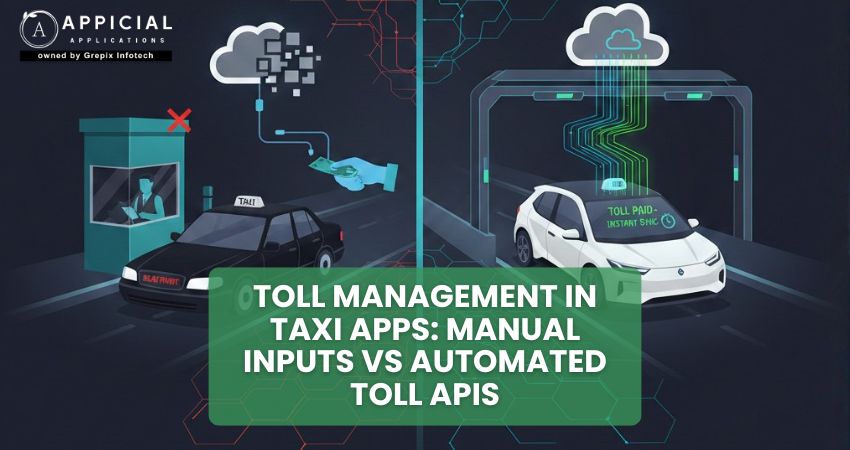
Toll Management in Taxi Apps: Manual Inputs vs Automated Toll APIs
Toll management plays a major role in digital ride platforms, as it influences fare accuracy, transparency, and customer satisfaction. Rising road toll usage in many regions has pushed mobility providers to integrate more reliable systems for calculating toll charges. Industry reports indicate that toll expenditures in ride-hailing operations have risen steadily due to urban expansion and highway digitization. This makes toll precision essential in every Uber Clone, every ride-sharing app, and every modern white-label taxi booking app.
Taxi operators need systems that record tolls consistently. Miscalculations can affect revenue, lead to customer disputes, and slow down driver operations. Manual toll entries once served as a standard method. However, rapid scaling, increasing ride volume, and the need for real-time accuracy have motivated many businesses to shift to automated toll APIs. As competition grows, every taxi app development company and each white label taxi app development company must integrate solutions that reduce human errors and support revenue protection.
The goal is simple. Riders expect transparent fares. Drivers require seamless workflows. Businesses demand operational accuracy. Proper toll management supports all three.
This comprehensive blog examines how toll management functions inside modern taxi platforms, focusing on efficiency, accuracy, and user experience. It compares traditional manual toll input systems with automated toll APIs. It also highlights how reliable toll processing strengthens pricing transparency, revenue management, and operational consistency. In the conclusion, this blog elaborates on why Appicial Applications is the ideal partner for developing advanced mobility solutions with automated toll features.
Why Is Toll Accuracy Important in a Ride-Hailing App?
Accurate toll calculations strengthen trust and ensure ride costs are consistent across thousands of trips. Research shows that even minor fare discrepancies increase customer complaints significantly. A difference of only a few dollars can trigger support requests that strain resources for operators. For large fleets using an Uber Clone, or any enterprise-grade ride-sharing app, multiplying these discrepancies by millions of rides amplifies losses.
Toll accuracy affects:
- Revenue reconciliation
- Customer satisfaction
- Driver earnings
- Algorithmic pricing consistency
- Dispute resolution times
Businesses operating a white-label taxi booking app rely on steady and predictable fare structures. Without precise toll handling, operators face unpredictable financial gaps. That is why every professional taxi app development company emphasizes toll automation features during the build process.
What Are Manual Toll Inputs in Taxi Apps?
Manual toll input is the traditional method. Drivers enter toll amounts during or after a ride. The system then adjusts the final fare. While this method appears simple, it requires driver involvement, memory accuracy, and consistency. Each entry relies on the driver’s judgment. This increases the risk of miscalculations.
For companies using a digital ride-sharing app, manual toll handling often results in operational inefficiencies. Drivers may:
- Forget the exact toll cost
- Record wrong tolls
- Overestimate to avoid underpayment
- Miss entries while multitasking
- Face delays during high traffic operations
Manual input can slow down the checkout process and cause disputes. Every white label taxi app development company now considers manual toll entry as outdated, especially for high-volume mobility businesses.
Advantages and Limitations of Manual Toll Inputs
Manual toll inputs have a few benefits. They require no additional technical integrations. Drivers can add toll values themselves, and operators can customize rules easily. It is simple to implement, even for small businesses testing a new Uber Clone or white-label taxi booking app.
However, limitations outweigh advantages. Manual entries frequently lead to:
- Human errors
- Rider dissatisfaction
- Slower ride completion
- Higher dispute rates
- Inconsistent data for financial reports
When ride volume increases, these issues multiply. Businesses working with a professional taxi app development company rarely choose manual toll systems today, except in regions without digital toll data.
What Are Automated Toll APIs in Taxi Apps?
Automated toll APIs retrieve real-time toll costs directly from toll authority databases or third-party toll networks. The system calculates toll charges automatically based on the route taken. No driver involvement is needed. The app adds tolls to the final fare instantly.
This automation enhances accuracy. For any ride-sharing app, especially those focused on scaling operations, automated toll APIs eliminate most disputes. They also allow the system to predict toll costs during ride estimation. That helps riders understand the expected fare before confirming the ride.
Every advanced white label taxi app development company includes automated toll API integration because it supports transparency, seamless workflow, and high operational productivity.
Benefits of Automated Toll APIs for Taxi Operators
Automated toll APIs offer multiple advantages that improve operational consistency. Some of the most important include:
- Accuracy: Toll APIs pull verified data. There is minimal chance of human error. Pricing becomes dependable for every ride.
- Transparency: Riders see the toll charges upfront. This increases trust in the platform and reduces after-ride disputes.
- Scalability: Automated systems are ideal for businesses using large-scale Uber Clone platforms with high ride frequency.
- Data Intelligence: APIs generate structured toll datasets. Operators can analyze toll usage patterns for cost optimization.
- Faster Ride Completion: Drivers focus solely on driving. They do not need to insert toll information manually.
- Lower Support Tickets: With fewer disputes, customer support teams handle fewer toll-related complaints.
Platforms built by an experienced taxi app development company benefit greatly from this automation because it supports long-term growth.
Manual Inputs vs Automated Toll APIs — A Detailed Comparison
- Reliability: Automated toll APIs provide reliable data pulled from verified sources. Manual toll entries rely on memory and can vary widely among drivers.
- Speed: API-powered toll management is instant. Manual input slows the system and increases ride completion time.
- Cost Efficiency: Automated systems reduce revenue leakage. Manual systems create small daily inconsistencies that grow into significant losses.
- User Trust: Riders prefer automated toll calculations because they eliminate doubt. Manual tolls feel subjective.
- Scalability: A platform built on manual toll entry cannot scale efficiently. Automated toll APIs support millions of rides across multiple regions.
Any modern white-label taxi booking app planning to compete globally requires API-driven toll automation. Every leading white label taxi app development company recommends this approach.
How Automated Toll APIs Improve Customer Experience?
Customer satisfaction depends on transparency. Surveys show that a high percentage of ride-hailing users prefer predictable pricing. Toll costs remain a common reason behind ride complaints. Automated toll APIs eliminate unexpected charges by presenting toll fees before booking.
For platforms built using an Uber Clone or specialized ride-sharing app, offering a clear fare breakdown strengthens customer loyalty. Riders trust applications that compute tolls with precision. The booking process becomes cleaner, and riders feel more informed.
Customer experience improves through:
- Fewer disputes
- Predictable fare results
- Faster checkout
- Accurate regional toll mapping
This is why marketplaces with automated toll systems generally outperform those relying on manual toll input models.
Operational Impact of Toll Automation for Taxi Businesses
Business operations depend heavily on consistency. Toll automation improves internal processes significantly. It reduces the need for manual validation and financial adjustments. Companies using automated toll APIs observe better driver compliance, fewer errors, and reduced administrative workload.
A professional taxi app development company integrates toll APIs to enhance:
- Accounting accuracy
- Reporting efficiency
- Financial forecasting
- Fleet-wide toll monitoring
- Performance analytics
With automation, businesses can allocate resources more effectively. They can focus on improving their ride-sharing app rather than solving toll-related issues.
Learn More: Toll Management in Taxi Apps: Manual Inputs vs Automated Toll APIs
How Toll APIs Boost Revenue Integrity
Revenue leakage is a real challenge for ride-hailing companies. Even minor toll recording errors accumulate into significant annual losses. Automated toll APIs reduce this leakage by creating consistent pricing.
Automated systems:
- Prevent overcharging and undercharging
- Ensure fare integrity
- Help maintain accurate billing records
- Support large-scale audits
- Improve financial transparency
This is why every enterprise-grade Uber Clone built by a top white label taxi app development company relies on automated toll APIs rather than manual toll inputs.
How Taxi Startups Should Choose Between Manual Inputs and Automated Toll APIs?
Startups need reliable systems that encourage customer trust and simplify operations. For new businesses or pilot projects, manual toll entry may appear attractive due to low initial complexity. However, startups aiming to scale should prioritize automation.
A seasoned taxi app development company typically recommends automated toll APIs for:
- Accurate billing
- Lower support costs
- Better user experience
- Scalable infrastructure
- Reduced driver workload
Manual toll entry is only suitable for very small fleets or regions without digital toll data. Growing ride-hailing startups benefit more from automation.
Conclusion- Why Appicial Applications Is the Best Partner for Advanced Toll Automation?
Toll management influences every aspect of modern mobility. Manual toll inputs slow operations, increase disputes, and reduce fare consistency. Automated toll APIs improve accuracy, boost transparency, enhance customer satisfaction, and support efficient scaling. For platforms built as an Uber Clone, or any enterprise-level ride-sharing app, automation is essential for long-term success.
Appicial Applications excels in delivering robust, scalable, and intuitive mobility solutions. As a leading white label taxi app development company, Appicial offers advanced toll API integrations, secure fare management modules, and enterprise-grade automation features. Their team ensures that every white-label taxi booking app meets global standards for precision, speed, and reliability.
If your business aims to launch a next-generation ride platform with seamless toll automation, Appicial Applications is the partner you need.
Contact Appicial Applications today to build a high-performing ride-hailing solution with future-ready toll automation.
FAQs
Author's Bio

Vinay Jain is the Founder at Grepix Infotech and brings over 12 years of entrepreneurial experience. His focus revolves around software & business development and customer satisfaction.
Back to blog list