
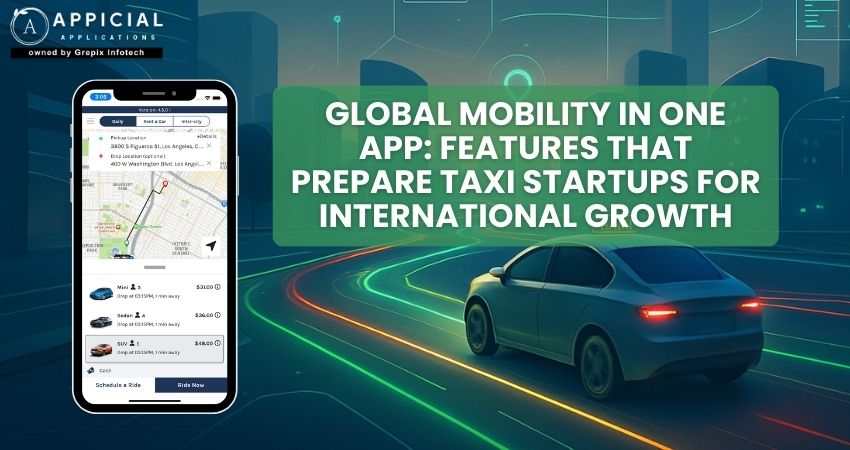
Global Mobility in One App: Features That Prepare Taxi Startups for International Growth
Expanding a taxi service into new countries is not simple. Each region has its own rules, languages, and payment habits. A modern mobility platform must handle all these differences without slowing down. The global ride-hailing market has grown fast in the past decade. Research reports show that the industry is expected to pass USD 450 billion by 2030. This rise pushes startups to think bigger and enter new territories.
A global-ready Uber Clone does more than connect riders and drivers. It manages variations in currency, time zones, compliance, maps, fuel costs, and market behavior. Startups need a system that can scale without disruptions. They also need predictable performance and secure data handling. A platform with these qualities reduces risk and allows faster international launches.
The next sections break down the functions that enable global mobility and the technology that supports it.
This blog explains how global mobility features inside a modern Ride-sharing app help taxi startups operate across borders. It covers localization, compliance, mapping, backend systems, and scalability. It also highlights why Appicial Applications offers the right tools and experience for international ride-hailing growth.
What Factors Make a Taxi App Ready for Global Expansion?
Your system must work under different conditions. It must load quickly in regions with weak internet. It must support high demand in crowded cities. It must adjust to rules that change from place to place. A strong architecture handles these variations.
A modern mobility platform must process thousands of requests at once. This becomes important when entering large markets. A white-label taxi booking app with modular design helps teams deploy faster. Modules can be added or removed depending on the country.
Time zone support also matters. Trips, payments, and support tickets must align with the local clock. The platform must store country-specific settings separately. This reduces errors and keeps reporting accurate.
The backend should also handle traffic spikes. In some countries, weekends show heavy usage. In others, weekdays dominate. Autoscaling servers prevent downtime when demand rises. A reliable taxi app development company can design this type of infrastructure.
Why Is Localization Essential for Global Mobility?
People trust apps that feel familiar. Localization makes that possible. A global system must include more than translation. Users expect accurate local currency conversions. They also expect clear fare breakdowns and region-specific settings.
A strong localization engine handles languages, currency formats, measurement systems, holiday calendars, and promo styles. For example, distance units may vary. Some countries use kilometers. Others use miles. The system must adapt without affecting trip accuracy.
Payment habits also differ. Some countries rely on e-wallets. Others prefer credit cards or cash. Adding region-specific payment gateways increases trust and conversion. This is easier when the product comes from a white label taxi app development company that understands local markets.
A global survey by CSA Research found that nearly 74% of customers prefer using services presented in their own language. This number shows how critical localization is when entering foreign markets.
How Do Regulations Affect International Taxi Operations?
Every region controls transportation in its own way. Regulations can shift quickly. A mobility app must adapt without delays.
Many cities require driver permits, insurance documents, background verification, and special local approvals. The system must store, track, and validate these files. Automated alerts help drivers renew licenses on time. Geo-fencing ensures drivers operate within authorized zones.
In some countries, ride-hailing companies must share trip numbers with local authorities. In others, data storage must stay within national borders. These rules change from one city to another. A reliable taxi app development company helps startups plan for these variations.
Global compliance also includes privacy. Frameworks like GDPR, PDPA, and CCPA demand strict data controls. They require user consent, secure storage, and transparent policies. Strong encryption and regular audits reduce compliance risks.
What Features Support Global Mobility in a Single Ride-Hailing Platform?
A global mobility product needs a wide set of features. Below are the core functions that support international scale.
- Multi-City and Multi-Country Control Admin teams should manage regions separately. Each country must have its own settings for taxes, distance rules, payout schedules, and operational areas.
- Multi-Language Capabilities Language support boosts user comfort. It also reduces support tickets. Drivers who speak the local language follow navigation instructions with fewer mistakes.
- Multi-Currency Billing Accurate conversion is essential. Users must see final fares in their local currency. Refunds and promotions must follow the same logic.
- Global Mapping Maps must be updated. Roads vary across regions. Navigation needs to reflect traffic patterns, toll roads, and restricted streets.
- Dynamic Pricing Some regions allow surge pricing. Others ban it. Dynamic rules help adjust fares based on demand, weather, or fuel cost. Rules should match local laws.
- Security and Verification Identity checks protect riders and drivers. ID scanning, photo verification, and document reviews reduce fraud. Real-time risk alerts add another layer of safety.
These features appear in strong Uber Clone platforms designed for global mobility.
Why Does Backend Architecture Play a Key Role in International Scaling?
The backend handles the heavy work. It runs trip assignments, maps, payments, and analytics. A global service cannot rely on a weak system.
A scalable backend uses microservices. Each feature runs independently. This makes updates easier. It also prevents one feature from crashing the entire system. The structure allows regional teams to upgrade local features without affecting others.
Cloud servers allow dynamic scaling. If a city experiences a spike in riders, the system reacts instantly. Auto-scaling prevents failures during peak hours. Companies that enter new markets rely on this flexibility.
Security is also crucial. Users share sensitive information. Encryption, firewall layers, and intrusion detection protect the ecosystem. Regular patching keeps the platform safe. A skilled white-label taxi app development company ensures the backend can securely handle global demand.
IBM research shows that downtime can cost companies more than USD 300,000 per hour. Strong infrastructure prevents these losses.
Learn More: Seamless Cash Trips: How the “Change to Wallet” Feature Improves Rider Experience
How Does a White-Label System Simplify Global Launches?
A white-label taxi booking app cuts development time. It also reduces technical complexity. Startups can focus on market entry, partnerships, and driver recruitment.
A white-label product already includes essential modules like localization, GPS tracking, driver payouts, navigation, and compliance tools. Teams only need to customize branding and workflows. Launches become faster and less risky.
White-label platforms also undergo prior testing. This improves reliability. When entering new regions, stability matters more than features. A ready-made solution helps reach that stability quickly.
A global rollout needs predictability. A white label taxi app development company with experience in multiple markets provides that predictability. It shortens timelines and improves system quality.
Why Should Startups Work With a Specialized Taxi App Development Company?
International mobility requires experience. A generic software team may struggle to understand regulations, mapping challenges, and ride-hailing patterns. A specialized taxi app development company brings domain knowledge and market insights.
These teams know what works in different regions. They understand local payment options, compliance needs, and pricing models. They also offer long-term support. This matters because mobility apps need constant updates.
A good partner also helps startups plan expansions. They guide on server planning, security, API integrations, mobile UI, and custom requirements. This reduces mistakes and speeds up growth.
Working with experts leads to smoother operations, fewer technical issues, and improved user experience.
Conclusion
Preparing for global mobility requires clear planning and the right technology. A strong system must support multi-language content, multi-currency payments, mapping variations, and compliance requirements. Startups must also consider backend stability, security, and scaling capacity. These elements determine how well a platform performs in new regions.
Appicial Applications delivers all these capabilities. Their global mobility solutions offer the flexibility and reliability needed for international expansion. Their Ride-sharing app frameworks provide localization, secure payments, and real-time tracking. Their Uber Clone is optimized for multi-country use. As a leading white label taxi app development company and a trusted taxi app development company, Appicial offers scalable products with enterprise-grade quality.
If your startup aims to grow beyond borders, Appicial Applications is ready to support your vision.
FAQs
Author's Bio

Vinay Jain is the Founder at Grepix Infotech and brings over 12 years of entrepreneurial experience. His focus revolves around software & business development and customer satisfaction.
Back to blog list