
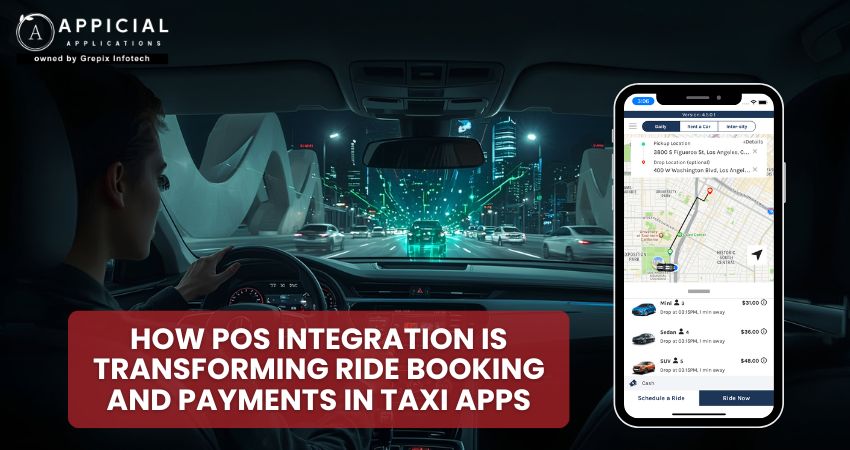
How POS Integration Is Transforming Ride Booking and Payments in Taxi Apps
The global ride-hailing economy has expanded rapidly with a projected valuation crossing $285+ billion by 2030, powered by increased smartphone adoption, urban mobility challenges, and technological advancement. As platforms continue to scale, seamless payments have become a fundamental business requirement rather than an optional feature. This shift has positioned POS systems as the backbone of real-time transactions inside modern taxi platforms. Industry growth is no longer driven solely by on-demand booking capabilities; instead, innovations like automated billing, card-based transactions, multi-currency support, and split-payment mechanisms shape the future ecosystem of ride mobility.
A Ride-sharing app or Uber Clone that includes POS integration succeeds because it reduces friction at the point of payment. Customers no longer wait for manual calculations or cash handling. Drivers get instant settlements. Business owners receive transparent financial records. This is why many transport fleets are upgrading their platforms to a white-label taxi booking app system equipped with advanced POS-powered modules. The integration ensures higher trust, predictable earnings, operational accuracy, and faster turnaround times per completed ride.
This long-form blog explains how POS systems are improving ride payments, operational reliability, and revenue accuracy in digital taxi solutions. It highlights features, adoption trends, automation advantages, and the business value of integrating POS inside a Ride-sharing app or Uber Clone platform. The content also discusses fleet scalability and payment transparency, while concluding with why Appicial Applications is an ideal partner for businesses looking for scalable POS-integrated mobility solutions.
Why Is POS Integration Important in Modern Taxi Booking Platforms?
POS integration solves a core challenge: speed and trust in financial settlement. Customers often hesitate during ride payments, especially when cash is involved. A POS-enabled taxi platform eliminates those delays and completes billing digitally. With real-time fare breakdown, automatic tip addition, dynamic surge pricing updates, digital receipts, and dispute-free payment logs, the process becomes structured and reliable.
Many fleet operators now prefer a white label taxi app development company that delivers ready-to-deploy POS-enabled ride platforms. Integration ensures each fare is calculated algorithmically, removing negotiation and inaccuracies. This improves customer satisfaction and reduces back-office accounting time by up to 60%, based on fleet digitization surveys across multiple regions. Companies providing end-to-end taxi software know that reliable billing is a direct revenue driver, not just a convenience feature.
How Exactly Does POS Improve Booking and Payment Processing?
A POS-powered ride platform works by connecting the payment gateway, card reader, driver wallet, admin settlement module, and user invoice system into one automated ecosystem. When a user books a ride on a Ride-sharing app, the fare estimate is generated instantly. After trip completion, POS processes the payment using saved cards, wallets, UPI alternatives, NFC tap-to-pay, or QR code scanning. The invoice is auto-generated, and transaction logs are stored in the admin dashboard. This eliminates the risk of missed payments or fare disputes.
In a white-label taxi booking app, this workflow is even more efficient. Drivers avoid carrying large cash amounts, which improves safety. Fleet managers get access to analytical reporting dashboards where every ride is tracked financially. Such structured data helps businesses design loyalty programs, reward frequency-based customers, and execute accurate surge pricing models. This approach brings digital order to an industry that previously depended heavily on physical cash transfers.
What Benefits Does POS Bring to Taxi Businesses, Drivers, and Riders?
Passenger convenience increases significantly when they know payment will not delay their exit. POS provides multiple options including debit, credit, wallet, digital card vault, and corporate billing. Data from urban mobility research shows 70%+ customers prefer cashless transport services, which indicates payment automation directly affects booking volumes.
For fleet operators, POS reduces financial leakage, eliminates revenue discrepancy, and simplifies settlement reconciliation. For drivers, automated credit transfer prevents unpaid ride issues, improving motivation. Businesses using an Uber Clone platform equipped with POS integration experience increased ride completion efficiency and higher retention rates. This is why demand for a taxi app development company with integrated POS expertise continues to rise worldwide.
POS Features That Improve Ride-Hailing Operations
A POS-enabled ride platform provides various functions that traditional taxi systems lacked. The most valuable ones include:
1 Instant Card-Based Ride Fare Settlement
Customers pay faster with card support. Drivers receive confirmation instantly. Fleet managers get records without manual entry.
2 Multi-Currency Processing for International Travelers
A POS-powered Ride-sharing app can accept foreign cards, increasing global usability. Tourism-heavy cities benefit from this feature the most.
3 Automatic Digital Invoicing for Every Ride
Invoicing maintains trust and expense tracking. Corporate travelers prefer transparency and downloadable receipts.
4 Driver Wallet Auto-Credit System
Earnings process without delay. Motivation increases. Disputes decrease.
5 Data Analytics Dashboard for Revenue and Trip Record
Business stakeholders track transactions. Peak periods are identified. Decision-making becomes data-driven instead of manual.
These system-driven features make a POS-integrated booking app more scalable for large fleets. Many global enterprises prefer partnering with a white label taxi app development company to access such built-in functions.
Why Are Businesses Migrating Toward POS-Integrated Uber Clone Platforms?
POS-driven automation reduces operational overhead. It allows taxi platforms to scale without increasing manpower proportionally. A taxi app development company that integrates POS helps entrepreneurs achieve process stabilization within weeks instead of months. Lower operational effort increases revenue potential. Reduced human error expands customer and driver satisfaction.
Fleet owners who previously used manual billing reported up to 40% faster dispatch-to-payment cycles after implementing POS-based workflows. Modern taxi businesses aim for automation because it increases ride frequency, shortens idle driver time, and reduces billing errors. A white-label taxi booking app with built-in POS therefore becomes a long-term strategic investment rather than just a booking software.
What Role Does POS Play in Fleet Growth and Scalability?
A platform without automated settlement may function for small fleets, but it becomes inefficient when ride volume increases. POS integration creates a standardized financial pipeline where every ride translates into digital revenue tracking. Businesses operating Ride-sharing app platforms across multiple regions rely on POS because it supports uniform billing, multi-branch accounting, and region-wise expense reporting.
Scalability improves significantly when a white label taxi app development company deploys POS-driven systems. Fleet size can grow from 50 to 500+ vehicles without financial breakdown. Data accuracy remains even at scale. Revenue reports are generated automatically and accessible anytime. This consistency helps businesses attract investors and secure long-term growth.
How Does POS Improve User Trust and App Retention?
Trust is the most influential factor when selecting a ride service. POS systems create a transparent transaction journey where users see detailed fare components including time, distance, surge, toll, and taxes. Passengers appreciate clarity, especially when charges fluctuate during peak demand.
Digital receipts prevent dispute escalation. Saved card options ensure quick checkout. The entire experience becomes smooth and reliable. A customer satisfied with payment convenience is more likely to reuse the Uber Clone platform. This increases the lifetime value of each registered rider and improves retention metrics across the business.
Learn More: POS Integration in Taxi Apps: Enabling Seamless Ride Booking and Payments
Why Should a Startup Choose a White-Label Taxi Booking App With POS?
A white-label solution accelerates time-to-market while maintaining feature richness. Instead of building from scratch, startups deploy instantly, saving development time and budget. A Ride-sharing app becomes commercially viable faster when POS is included from the initial release. It offers security, audit control, and cashless efficiency, critical elements for long-term survival in mobility markets.
Startups benefit more when they select a white label taxi app development company experienced in automated billing and PCI-compliant gateway integration. This ensures secure payments and regulatory alignment. Their platform can compete with established mobility networks confidently, while maintaining operational affordability and stability.
Conclusion Why Appicial Applications Is the Right Partner for POS-Integrated Taxi App Development
POS adoption is reshaping the future of ride-booking, revenue automation, payment transparency, and customer trust. A Ride-sharing app or Uber Clone equipped with centralized POS processing converts every trip into a controlled financial record. It supports fleet scaling, improves retention, and enables predictable revenue generation. Businesses planning long-term mobility operations require a system that eliminates billing complexity, supports international transactions, and automates driver settlements. This is where Appicial Applications provides unmatched value.
As a leading taxi app development company, Appicial Applications builds fully automated solutions with integrated POS billing, driver wallet modules, secure gateway support, admin reporting tools, and multi-currency payment capability. We also deliver high-performance white-label taxi booking app solutions designed for rapid deployment and global scalability. If you want seamless operations, strong profitability, superior user experience, and payment-driven growth, Appicial is the technology partner you can rely on.
Ready to launch your POS-powered taxi application? Contact Appicial Applications today for a demo, pricing, and feature consultation.
FAQs
Author's Bio

Vinay Jain is the Founder at Grepix Infotech and brings over 12 years of entrepreneurial experience. His focus revolves around software & business development and customer satisfaction.
Back to blog list