
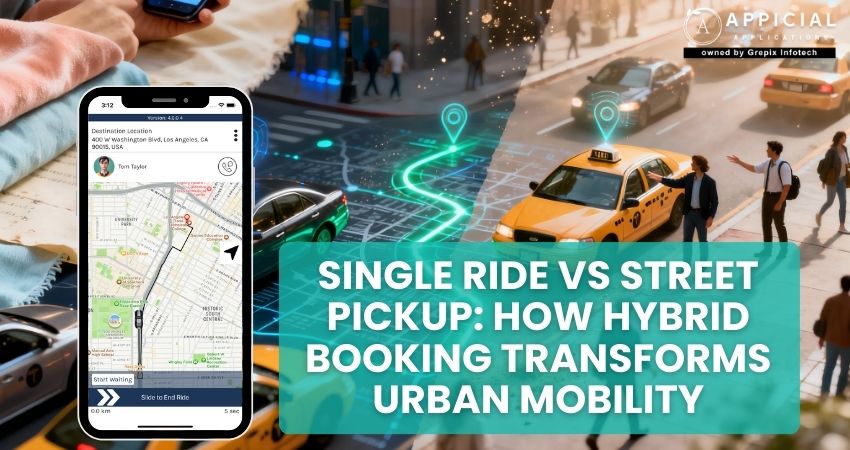
Single Ride vs Street Pickup: How Hybrid Booking Transforms Urban Mobility
Urban mobility is changing fast. Cities are growing, people travel more often, and their expectations keep shifting. Riders want quick access to transportation. Drivers want stable earnings. Operators want efficient systems that scale without friction. These demands push mobility companies to rethink their booking models and adopt something more flexible.
Two models dominate on-demand transportation: single ride booking and street pickup. Both work well in different situations. However, neither model alone supports every rider type or every city pattern. That gap is one reason hybrid booking is gaining strong momentum.
The global ride-hailing market has expanded rapidly. Analysts have noted steady year-on-year growth, and many expect the market to cross the $250B mark within the next few years. A good portion of that growth is linked to digital platforms, especially solutions built on Uber Clone frameworks and advanced Ride-sharing app systems. Operators now prefer platforms that allow multiple booking modes, better data visibility, and smarter fleet decisions.
This shift makes hybrid booking more than a trend. It is shaping how mobility companies operate and how urban riders move from one point to another.
This blog explains how single ride and street pickup models work, why mobility operators are shifting to hybrid booking, and what benefits it brings to users, drivers, and businesses. It also covers the technology behind hybrid systems, market behavior, operational gains, and why hybrid booking is becoming a long-term strategy for modern ride-hailing platforms. The conclusion highlights why Appicial Applications is a strong choice for mobility businesses aiming to launch smarter, hybrid-ready solutions.
What Makes the Single Ride Booking Model So Common?
Single ride booking is the method most people recognize today. Riders open an app, set a destination, see an estimated fare, and confirm the trip. The process is simple, clean, and predictable. Platforms rely on dispatch engines that match drivers with requests in seconds. This system is standard in every Ride-sharing app and most white-label taxi booking app solutions.
Riders like this model for one major reason: structure. They know who their driver is, what the fare might look like, and where the car is located. Many prefer the sense of control. Digital booking also makes payments easier. It removes the need for negotiation or manual tracking.
Drivers benefit too. Instead of looking for riders on the street, they get requests directly from the platform. That reduces downtime. Many drivers find that these systems increase their daily trip count.
Operators rely on the data behind single ride booking. Every trip is logged. Routes, demand trends, driver performance, and rider behavior all become part of the platform’s real-time insights. This data supports decisions around fleet distribution, pricing, incentives, and city expansion.
Surveys from various mobility research organizations show that most urban riders still lean toward app-based booking. Numbers differ by city, but a large majority, often above 70%, prefer digital requests for reliability and record-keeping.
Because of these benefits, the single ride model remains a core feature in platforms created by any leading white label taxi app development company.
Why Do Some Riders Still Prefer Street Pickup?
Street pickup has been around long before the first mobile ride-hailing platform. It still exists because it offers one advantage digital systems cannot fully replicate: immediacy.
Riders don’t need a device. They don’t need an app. They don’t even need a data connection. They just flag a car from the curb and start the trip. In areas with high foot traffic or in zones where app availability fluctuates, street pickup remains a practical choice.
Some riders use it out of habit, while others choose it out of convenience. Short-distance trips, spontaneous plans, and areas with slow mobile connectivity often lean more toward street pickup.
Drivers also use this model to fill the gaps between digital requests. A driver passing through a busy area can pick up a rider without waiting for the next app notification. For some, this provides a quick way to increase earnings.
Street pickup lacks structure, though. There is no automatic fare calculation, GPS-based route, or trip history. Operators get no visibility into such trips. That makes it difficult to enforce consistency or monitor fleet performance.
Even with these drawbacks, studies have shown that a sizable percentage of riders—sometimes close to 40% depending on the city- still use street pickup occasionally. This demand is one reason hybrid booking has become essential rather than optional.
Why Are Mobility Providers Moving Toward Hybrid Booking?
Hybrid booking blends both models into one system. It gives riders the freedom to choose how they want to book a trip. It also gives drivers more flexibility in how they accept requests.
Mobility operators have realized that neither model alone can handle today’s diverse travel patterns. People travel differently depending on the situation. Some prefer app-based booking on weekdays and quick street pickups on weekends. Hybrid booking accommodates both without forcing riders into a single option.
A hybrid-capable platform can adapt better to traffic spikes. For example, during peak hours, app demand may surge. But in certain districts, street pickup might remain dominant. A hybrid system balances the flow, helping drivers fill more trips without long idle periods.
Research and industry reports suggest that companies using hybrid systems often observe a noticeable increase in trip volume. Some see improvements of around 20% or more simply because they’re capturing demand from multiple channels.
Operators also appreciate the broader coverage. A hybrid model helps them handle both digitally active and non-digital users. This flexibility is especially useful in areas where digital penetration is inconsistent.
It’s no surprise that every major taxi app development company now builds hybrid-ready platforms as part of their core product suite.
How Does Technology Enable Hybrid Booking to Work Smoothly?
For hybrid booking to function well, the underlying platform needs to handle many tasks at the same time. The system must process app-based requests while also tracking drivers who are open to roadside pickups.
Several technologies support this:
- AI-driven dispatch AI helps the system match riders and drivers faster. It balances traffic flow and reduces delays.
- GPS tracking Real-time location accuracy is essential. It helps operators see which drivers are available, regardless of how the booking is triggered.
- Dynamic pricing tools A hybrid system requires flexible fare engines since street pickups may operate differently from app bookings.
- Telematics Sensors and tracking tools help optimize routes, fuel use, and driver performance.
- Analytics dashboards Businesses need insight into both booking types. Good analytics show trends, gaps, and performance patterns.
A modern Uber Clone or white-label taxi booking app usually includes these technologies. Companies depend on them to run hybrid systems without causing confusion for drivers or riders.
Learn More: How Why VOIP Calling Is Becoming Essential in Modern Taxi Apps
How Does Hybrid Booking Improve the Rider Experience?
Hybrid booking creates a more flexible experience for riders. If a person prefers structure, they can book through the app. If they want something quick, they can grab a car on the street.
This freedom reduces waiting times. Many cities that support hybrid booking see a drop in average wait times because riders are not limited to a single request channel.
Riders also appreciate that hybrid models maintain digital transparency. Even if they choose a street pickup, some systems log the trip once the driver starts the ride through the app interface.
This combination of freedom and safety is a key reason hybrid models are gaining traction.
How Does Hybrid Booking Benefit Drivers and Operators?
Drivers enjoy more earning opportunities. They can accept app bookings and also pick up riders they see along the way. This helps fill gaps and reduces idle miles.
For operators, hybrid booking leads to better fleet utilization. Cars stay active longer. Trips per vehicle increase. This often leads to healthier revenue without requiring a larger fleet.
Hybrid-ready systems also help operators expand into new areas more smoothly. In some neighborhoods, street pickup might work better at first. As usage grows, the app-based model can take over. A hybrid system supports both phases.
Platforms built by a strong white label taxi app development company or taxi app development company often include tools that help operators analyze these trends and plan expansions more confidently.
Conclusion
Hybrid booking is reshaping how mobility providers operate. It takes the best parts of single ride booking and street pickup and merges them into a more flexible, more efficient model. Riders get more options. Drivers fill more trips. Operators manage fleets with better visibility and better long-term scalability.
If you're planning to build or upgrade a ride-hailing platform, Appicial Applications offers one of the most reliable ways to move forward. Their solutions include advanced Ride-sharing app systems, robust Uber Clone platforms, and fully customizable white-label taxi booking app products. They bring the technical depth, industry experience, and hybrid-ready features that mobility businesses need today.
Ready to launch a smarter mobility platform? Connect with Appicial Applications and build a hybrid booking system that helps your business grow with confidence.
FAQs
Author's Bio

Vinay Jain is the Founder at Grepix Infotech and brings over 12 years of entrepreneurial experience. His focus revolves around software & business development and customer satisfaction.
Back to blog list