
Kiosk Booking Systems: The Future of Airport and Mall Ride-Hailing
There is a positive worldwide trend towards self-service technology in the global ride-hailing market. Kiosk booking systems are a transformative layer by which passengers at malls, airports, hotels, terminals and other public hubs are able to book taxis quickly without requiring mobile applications. This transition has substantial backing from a year-on-year increase of around 27% in autonomous ride-hail touchpoints, denoting general digitization acceptance on the part of urban riders. As international airport and commercial retail complex passenger load increases, centralized kiosk stations are providing a link between available ground transportation and real-time passenger needs. The convenience, accessibility, and immediate functionality of kiosk-based ride-booking reduce wait time, eliminate network dependency, and streamline the workflow of a modern fleet ecosystem.
This blog explores kiosk innovations, operational advantages, scalability, integration with modern Ride-sharing app platforms, and why businesses need to adopt this technology now to stay competitive. The discussion is elaborated, analytical, and insight-oriented, ensuring every section delivers real-world value without storytelling patterns.
Kiosk booking systems are rapidly reshaping airport and mall ride-hailing by offering fast, app-free taxi booking through digital terminals. These stations enable passengers to request rides instantly, access fare estimates, view driver details, and complete bookings without relying on mobile apps or internet connectivity. Integrated with modern Ride-sharing app ecosystems and Uber Clone platforms, kiosk solutions enhance dispatch automation, reduce wait times, and increase fleet utilization. Airports and shopping malls benefit from structured passenger flow management, improved transportation efficiency, and higher booking volume capture.
What Makes Kiosk Booking Systems the Next Step in Ride-Hailing Technology?
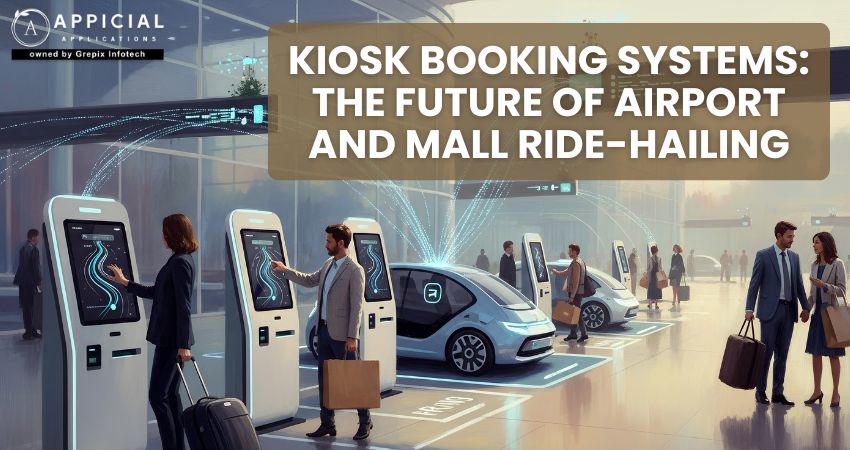
Kiosk booking systems provide immediate accessibility for passengers who require fleet services without downloading an app. A digital kiosk placed inside airports or malls functions as a unified ride-dispatch point where users can request a vehicle within seconds. A touchscreen interface allows users to select destination, vehicle type, distance, estimated cost, and driver ETA. This resolves one of the biggest challenges in traditional app-only ride bookings, dependence on smartphones, connectivity, and mobile literacy.
Research indicates that 42% of international travelers prefer on-site automated transportation booking instead of mobile-only methods. This number grows significantly in peak travel seasons, supporting the need for responsive infrastructure. Such booking terminals integrate effortlessly with Uber Clone systems and fleet management dashboards. The kiosk becomes a traffic-directing medium, offering operators the ability to balance bookings efficiently between mobile app users and walk-in customers.
Businesses that integrate kiosks benefit from improved order distribution, reduced idle driver hours, and higher ride completion ratios. The system also increases accessibility for senior citizens, tourists without data roaming, users with low battery devices, and customers who prefer physical booking points. Instead of operating in isolation, kiosks extend the ecosystem capabilities of a Ride-sharing app, offering more revenue channels from the same infrastructure.
The role of a taxi app development company becomes crucial here because taxi firms require scalable software, database syncing, revenue analytics, and real-time dispatch automation. For companies planning long-term expansion, this level of connectivity creates long-lasting retention loops. In competitive markets, even a 10%–12% increase in lead capture through offline conversion can make substantial year-over-year profit growth.
How Do Kiosk Systems Improve Ride-Dispatch Efficiency?
Efficiency is the core advantage of kiosk booking stations. When connected to a white-label taxi booking app, kiosks receive live vehicle availability data, track fleet positioning through GPS, and allocate nearby drivers automatically. Ride allocation becomes faster because the system relies on routing automation rather than manual confirmation. A digital queue ensures that every booking gets a driver without system overload or mismanagement.
Studies show that automated dispatch improves ride allocation speed by 31% compared to manual dispatching models. In airports, where more than 150K-300K passengers transit daily automation serve to eliminate unnecessary time to wait, from which passengers can proceed to their final destination. Kiosks at malls help a safer departure from shopping late at night by providing immediate taxi service without requiring phone data to be on.
Integration with fleet management dashboards gives operators real-time analytics on booked rides, peak hours, passenger flow density, and ideal driver allocation zones. This level of operational clarity strengthens business decisions and reduces overhead operational costs. A white label taxi app development company can architect kiosks as an add-on module to enhance dispatch automation and revenue intelligence.
Why Are Airports and Malls Prioritizing Kiosk-Based Ride Solutions?
Airports and malls experience high-density passenger traffic, making them ideal deployment centers for mobility kiosks. These locations have consistent daily ride demand, diverse passenger categories, and require quick turnaround transportation. International airports handle millions of passengers every month, where taxi demand peaks at arrival hours. Kiosks ensure equal booking opportunities for everyone, not just app users.
Malls and commercial complexes see heavy weekend and holiday activity. Shoppers who exit with luggage or packages need transport access immediately. A kiosk station reduces congestion at traditional taxi stands and introduces structured digital booking. Operators experience increased trip volume because the system captures walk-in demand that would otherwise remain untapped.
The technology also aligns with sustainability goals. With automated queuing and fuel-efficient route suggestions, the dispatch network becomes more optimized, reducing idle time and unnecessary car movement. As public adoption of Ride-sharing app platforms increases globally, kiosks are being recognized as future-proof mobility entry points.
Can Kiosk Booking Systems Operate with Uber Clone Platforms?
Yes. The integration between kiosks and Uber Clone-based platforms is seamless. Both operate on real-time fleet mapping, driver assignment, distance fare calculation, and safety monitoring. A kiosk essentially functions as a secondary interface to the same backend system that powers a mobile booking application.
With a user-centric design, kiosks benefits include:
- Direct booking without logging in or registering
- Instant fare estimation and route calculation
- Driver screening and vehicle information display
- Multiple vehicle fleet categories with pricing slabs
- Receipt printing and SMS/QR ride confirmation
When developed by a robust taxi app development company, kiosks become scalable infrastructure that integrates with payment gateways, multilingual UI, corporate booking models, surge pricing, wallet top-ups, and membership loyalty features. This enhances user convenience and strengthens operational control.
Learn More: How POS-Based Ride Booking Helps Taxi Businesses Capture Offline Customers
What Are the Commercial Benefits for Fleet Operators and Businesses?
Adopting kiosk booking systems leads to increased revenue, expanded user coverage, and improved fleet utilization. Operators reduce missed bookings that usually occur when travelers avoid app installation due to time constraints or storage limitations. Automated dispatching reduces operational cost because fewer support staff are needed for managing passenger queues.
Despite the inherent limitations of the data produced by ride hailing services, analytics provide operators with an understanding of demand zones, active hours, and positioning opportunities. This increases profitability, while aiding the firms in estimating future expansion plans. The kiosks are coupled with a white label taxi booking application, forming an omnichannel booking infrastructure that is available on physical stations, web panels, AI chatbots, and mobile applications.
Commercial benefits include:
- Higher booking volume capture rate
- Reduced support team labor cost
- Streamlined airport & mall transportation load
- Strong integration with enterprise-grade Uber Clone backend
- Long-term scalability and operational stability
Fleet brands improve trust perception because kiosks symbolize a well-organized, forward-thinking transportation brand. This increases user retention and encourages repeat usage.
Should Businesses Invest Now in White-Label Taxi Kiosk Development?
Immediate investment is strategic because the global mobility industry is shifting rapidly towards hybrid app-kiosk systems. Forecasts predict that the market for self-service transport reservations will go on to be worth more than $9.8 billion by 2030, due to expansions in airports, increases in cross-border tourism and more cohesive public transportation.
A kiosk–app hybrid model ensures business continuity even during large events, network downtimes, or sudden passenger surges. The presence of digital stands also increases accessibility for differently-abled passengers and elderly travelers unfamiliar with mobile technology. When deployed at key zones within malls or airports, kiosks enhance user convenience and increase booking perfomance.
Selecting a white label taxi app development company ensures faster deployment, lower build cost, and long-term technical compatibility. Businesses should prioritize UI clarity, dispatch automation, payment options, multilingual support, and integration capability when launching kiosk systems connected to a Ride-sharing app.
Conclusion: Appicial Applications as Your Technology Partner
The future of on-demand transportation is through multi-access channels for booking, and transportation kiosk systems are becoming a necessary infrastructural components of airports and malls. These are reliable, available and scalable, promote better fleet utilization as well as higher overall trip volume. As demand for automated ride hailing worldwide grows, kiosks enable companies to secure each segment of riders, not just those with smartphones.
To build high-performance kiosk solutions integrated with Uber Clone, businesses need an experienced development provider. Appicial Applications, a leading taxi app development company and prominent white label taxi app development company, delivers enterprise-grade kiosk platforms synchronized with mobile apps, fleet dashboards, and dispatch modules. Their technology empowers operators to launch white-label taxi booking app systems with secure payment routing, real-time GPS, analytics, and commercial-scale deployment flexibility.
If your organization is planning to introduce next-generation airport or mall ride-hailing infrastructure, Appicial Applications is the most reliable partner to develop scalable mobility architecture.
Contact Appicial Applications today to build your advanced kiosk-enabled ride-hailing ecosystem and elevate your transportation business into the future.
FAQs
Author's Bio

Vinay Jain is the Founder at Grepix Infotech and brings over 12 years of entrepreneurial experience. His focus revolves around software & business development and customer satisfaction.
Back to blog list